
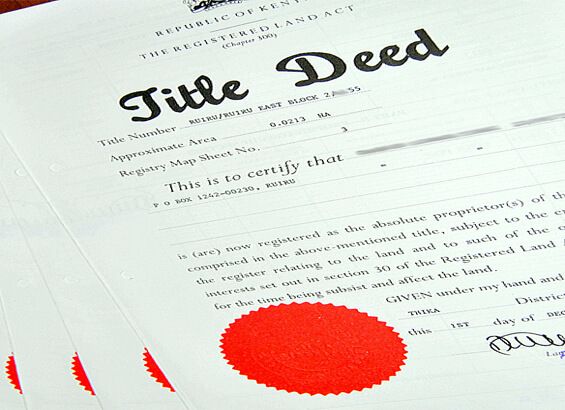
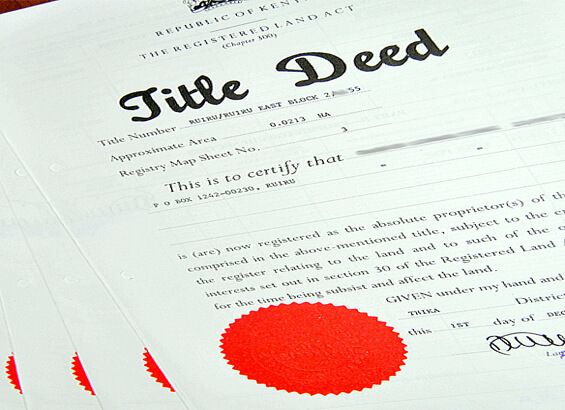
Every week in Kenya, someone loses money they cannot recover to a property deal that looked clean. A convincing seller, a plausible story, documents that appeared genuine. By the time the problem surfaces, a disputed title, a building on riparian land, a structure that was never approved, the deposit is gone and the legal process is long.
The uncomfortable truth is that most of these losses were preventable. Not by luck or instinct, but by a structured due diligence process that crosses six distinct checkpoints before a single shilling changes hands.
Table of Contents
A title search in Kenya is the starting point. But it is not the whole story. Verifying that a property is genuinely clean requires checks across the Ministry of Lands, Nairobi City County, NEMA, the National Construction Authority, the Ndungu Commission records, and, if the property is near an airport, the Kenya Civil Aviation Authority.
Here is exactly how each check works, what it tells you, and where to go.
Step 1: Title Search – Ministry of Lands (Ardhisasa / eCitizen)
The title search is the non-negotiable first step in verifying any property in Kenya. It is an official inquiry directed at the land registry that returns a certified record of the current registered owner, the nature of the title, and all encumbrances, caveats, charges, or cautions currently registered against the property.
Where to do it
For Nairobi properties, the search is conducted through the Ardhisasa platform at ardhisasa.lands.go.ke, the Ministry of Lands and Physical Planning’s digital system that is progressively replacing the old manual process. Ardhisasa is accessible online and covers fully digitised Nairobi titles. For properties in areas not yet migrated to Ardhisasa, searches are initiated through eCitizen at ecitizen.go.ke under the Ministry of Lands, or conducted physically at the relevant land registry.
The Ministry of Lands head office, commonly called Ardhi House, is located at 1st Ngong Avenue, off Ngong Road, Nairobi. For older title categories, central registry, and Survey of Kenya records, this is where physical searches are processed.
How it works
You will need the exact title number from the title deed, the land reference number, parcel number, or sectional title number as appropriate. Do not rely on what the seller gives you verbally. Obtain the title number from the physical document and verify it independently.
On Ardhisasa: register with your national ID and KRA PIN, enter the title number, upload the required documents, and pay KES 500 via M-Pesa, card, or bank transfer. A digital Land Search Certificate is typically ready within one to three working days. On eCitizen for legacy registries: the process follows the RL27 form, with a fee of KES 1,000 plus a KES 50 facilitation charge, and results arrive as an official RL27 certificate valid for six months.
What it tells you
The search result confirms:
- Who the registered owner is at the time of search
- The size and description of the parcel
- Whether there are any mortgages, charges, or loans registered against the title
- Whether any cautions, caveats, or restrictions have been lodged by third parties
- Whether the title is in any way subject to pending court proceedings or disputes
A clean search result shows the seller as the registered owner with no encumbrances. Any discrepancy between the search result and what the seller has told you should stop the transaction immediately.
Critical note: for properties in Ngong, Kikuyu, and some other peri-urban areas, the digital systems may not yet fully cover the title. In those cases, the search must be conducted physically at the relevant local registry with a manual form and Ardhisasa payment confirmation.
Step 2: Building Approval Search – NCC Urban Planning Department
If the property you are buying has a building on it, residential, commercial, or mixed use, you need to verify independently that the structure was legally approved.
Where to go
For Nairobi properties: the Urban Planning Department of Nairobi City County (NCC), accessible at City Hall on City Hall Way. This is the department that issues development permission and building plan approvals for all developments within Nairobi’s county boundaries.
What to check
Your advocate or a licensed architect should request confirmation of:
- Development permission: that the property owner obtained approval to develop the land for the current use — whether residential, commercial, or mixed use. Without development permission, any building on the land is technically unauthorised.
- Building plan approval: that the specific architectural drawings for the structure were reviewed and approved by the county before construction began.
- Completion certificate: for an existing building, confirmation that the county inspected the completed structure and issued a certificate of compliance. The absence of a completion certificate means the building has never been officially signed off, regardless of how long it has been standing.
Why this matters more than most buyers realise
Nairobi’s construction boom has produced an enormous number of buildings, particularly rental apartments, that were built without full approvals, with approved plans that were subsequently altered during construction, or on land zoned for a different use. The NCC periodically conducts compliance sweeps, and unapproved structures are subject to demolition orders. Buying such a building, or an apartment unit within one, transfers that risk to you.
This check applies equally to off-plan purchases. Before committing to a unit in a development under construction, confirm that the developer holds NCC development permission and building plan approval for exactly what they are building, not an earlier, different iteration.
Step 3: NEMA Verification – Riparian Reserve and Environmental Clearance
The National Environment Management Authority (NEMA) is the regulatory body responsible for environmental management in Kenya, established under the Environmental Management and Coordination Act (EMCA). Its relevance to property buyers is direct and sometimes alarming.
The riparian reserve issue
Kenya’s EMCA designates riparian reserves, strips of land running along rivers, streams, lakes, and other water bodies, as protected areas. Under the Environmental Management and Coordination (Wetlands, Riverbanks, Lakeshores and Seashores) Management Regulations 2009, the riparian reserve extends a minimum of 6 metres and a maximum of 30 metres from the high-water mark of a river or stream. No construction or development is lawfully permitted within this zone without NEMA’s written approval.
Nairobi sits on a water-rich geography. The Nairobi River, Mathare River, Ngong River, Ruiru River, and dozens of smaller seasonal watercourses run through and around the city. In 2024, NEMA reported over 500 cases of encroachment on riparian land across Kenya. Studies have shown that over 20% of urban riparian zones in Nairobi have been encroached upon. Many of those encroachments carry title deeds. A title deed over riparian land is not a guarantee of legality, it is evidence that the encroachment was formalised on paper.
How to check
Engage NEMA directly to confirm whether a specific property falls within a riparian reserve. The Nairobi Regeneration Task Force, a presidential initiative drawing on inter-ministerial expertise, also maintains information on riparian land within Nairobi and can be consulted. Commission a licensed surveyor to physically confirm property boundaries against waterway locations. Cross-reference with maps showing the historical flow of rivers and seasonal streams in the area.
EIA compliance for developments
If the property includes or is intended to include a significant development, NEMA also oversees the Environmental Impact Assessment (EIA) process. Section 58 of EMCA requires that any project likely to have a significant environmental impact must obtain an EIA licence from NEMA before construction begins. An EIA licence, once issued, is valid for 24 months. Confirm whether the development you are buying into obtained one, and whether it remains current.
Step 4: National Construction Authority (NCA) – Project and Contractor Registration
The National Construction Authority, established under the National Construction Authority Act 2011, regulates the construction industry in Kenya. Its relevance to property buyers sits at the intersection of building quality and legal compliance.
What NCA regulates
The NCA requires that all construction projects above a threshold value be registered with the authority before work begins. It also requires that all building contractors operating in Kenya hold a valid NCA registration certificate, renewed annually. The NCA verifies:
- That the contractor engaged on a project holds a current, valid NCA registration
- That the project has been registered with NCA prior to commencement
- That health and safety regulations are being followed on site
- That construction techniques and materials comply with Kenya Bureau of Standards (KEBS) specifications
How to use this as a buyer
For any building under construction that you are considering purchasing, particularly off-plan apartments and commercial developments, ask your advocate to confirm that the contractor holds a current NCA registration and that the project is registered with NCA. Both can be verified on the NCA’s public portal.
For an existing building, NCA registration during construction is a compliance signal. Its absence suggests the development proceeded outside the regulated framework, which may affect your ability to obtain a mortgage on the property, register it under the Sectional Properties Act, or sell it to a buyer who does their own due diligence.
Step 5: Ndungu Report Search, Checking for Irregular Land Allocation
The Ndungu Report, formally the Report of the Commission of Inquiry into the Illegal/Irregular Allocation of Public Land, published in 2004, is one of the most significant and underutilised due diligence tools available to Kenyan property buyers.
The Commission, chaired by Paul Ndungu, documented thousands of cases in which public land was illegally or irregularly allocated to private individuals and entities during Kenya’s post-independence period. The allocations covered land meant for public parks, roads, school grounds, wetlands, forests, river riparian areas, government reserves, and institutional use. Beneficiaries included politically connected individuals, government officials, and private companies. Many of those allocations produced title deeds that are still in circulation today.
What this means for buyers
A property that appears on the Ndungu Report’s list of irregular allocations carries a fundamentally clouded title, one that is subject to cancellation by the National Land Commission or challenge through the courts, regardless of how many times it has been transferred since the original irregular allocation. The current registered owner may have purchased in good faith. That does not cure the original defect.
How to search
Physical copies of the Ndungu Report are available at the Kenya National Archives in Nairobi. Experienced property advocates and some specialised research firms maintain searchable databases cross-referencing report entries with current title information. Cross-referencing Kenya Gazette notices of land revocation is also a productive parallel search.
Your advocate should conduct this check for any land purchase in areas that were historically subject to significant irregular allocation, which, based on the report’s findings, includes substantial portions of Nairobi’s periphery, coastal land, public institution land across the country, and land adjacent to government facilities.
Step 6: Kenya Civil Aviation Authority (KCAA), Airspace and Height Restrictions
This is the due diligence step that surprises most buyers, and the one that has become significantly more consequential following a KCAA enforcement notice issued in early 2026.
What KCAA regulates for property
Under Section 57 of the Civil Aviation Act and the Civil Aviation (Aerodromes) Regulations 2013, no person may construct, erect, or alter any structure within a 15-kilometre radius of any aerodrome in Kenya without prior written authorisation from KCAA. The authority regulates height limits, obstacle clearance surfaces, and in some cases the colours and lighting requirements for buildings that fall within these zones.
In February 2026, KCAA issued a public enforcement notice to all property owners, developers, and lessees within this radius, requiring installation of Class B medium-intensity aeronautical obstacle lights on structures within the affected zones, and explicitly reaffirming that no construction may proceed within 15 kilometres of any aerodrome without KCAA’s prior written approval.
Which Nairobi neighbourhoods are affected
Wilson Airport, located in Lang’ata, is Kenya’s busiest domestic and charter airport. Its 15-kilometre restriction zone covers a substantial portion of Nairobi’s mid-to-southern suburbs, including:
Lang’ata, Karen, South B, South C, Madaraka, Nairobi West, Nairobi Dam, Ngumo, Highview, Kibera, Highrise, Otiende, Uhuru Gardens, Ongata Rongai, Ngong Road, and Kabete.
JKIA’s restriction zone covers the Embakasi corridor, parts of Syokimau, and areas along the Eastern Bypass.
KCAA’s legal counsel has also noted publicly that flight paths, which carry their own height and development restrictions, can extend more than 50 kilometres from an airport. This means properties well outside the commonly understood airport vicinity may still require KCAA review.
What to do
Before purchasing property in any of the affected areas, and particularly before any development, contact KCAA directly or instruct your advocate to obtain written confirmation of the height restriction and airspace requirements applicable to the specific parcel. KCAA can be reached through its website at kcaa.or.ke or via [email protected]. Building without this clearance in a restricted zone risks demolition and enforcement action regardless of whether county planning approval was obtained.
Bringing It All Together: What a Complete Due Diligence Looks Like
Running all six checks is not bureaucratic overreach, it is the minimum standard for any serious property transaction in Kenya. A clean result across all six is as close to certainty as the Kenyan property market allows.
| Check | Where to go | What it confirms |
| Title Search | Ministry of Lands — Ardhisasa / eCitizen / Ardhi House, Ngong Road | Registered owner, encumbrances, cautions |
| Building Approval | NCC Urban Planning Dept, City Hall (Nairobi) | Development permission, building plan, completion certificate |
| NEMA Verification | NEMA directly + licensed surveyor | Riparian status, EIA compliance |
| NCA Registration | NCA portal / physical offices | Contractor registration, project registration |
| Ndungu Report | Kenya National Archives / legal research | Irregular allocation history |
| KCAA Clearance | kcaa.or.ke / [email protected] | Airspace restrictions, height approval |
Most buyers in Kenya run Step 1. The ones who avoid the most expensive mistakes run all six.
Thomas Louis Advocates conducts comprehensive property due diligence for buyers, investors, and developers across Kenya and East Africa — including title searches, regulatory compliance checks, and coordination across all relevant authorities. If you are considering a property purchase and want a complete legal due diligence,contact our property law team here.
Frequently Asked Questions
- How much does a title search in Kenya cost? A land search on the Ardhisasa platform costs KES 500. An eCitizen search for legacy registries costs KES 1,000 plus a KES 50 facilitation fee. Physical searches at county registries may vary slightly. The search result, an official RL27 certificate, is valid for six months and is the only authoritative confirmation of ownership and encumbrances.
- What is the Ndungu Report and how does it affect property buyers in Kenya? The Ndungu Report, published in 2004, documented thousands of irregular and illegal allocations of public land in Kenya. Properties listed in the report carry clouded titles subject to revocation by the National Land Commission, regardless of how many times they have subsequently been transferred. Buyers who unknowingly acquire such properties face the risk of losing both the property and the purchase price. A Ndungu Report check should be standard due diligence for any land purchase in Kenya.
- What is a riparian reserve and can I build on it in Kenya? A riparian reserve is a protected strip of land running along rivers, lakes, and water bodies. Under Kenya’s EMCA regulations, the reserve extends between 6 and 30 metres from the high-water mark of a water body. No construction is permitted within this zone without NEMA’s prior written approval. Buildings erected in riparian reserves are subject to demolition, regardless of whether a title deed exists.
- Does the KCAA restriction apply to properties near Wilson Airport in Nairobi? Yes. KCAA regulations prohibit construction or alteration of any structure within 15 kilometres of any aerodrome in Kenya without prior written KCAA authorisation. Wilson Airport’s restriction zone covers a large portion of Nairobi’s southern suburbs, including Karen, Lang’ata, South B, South C, Ngong Road, and Ongata Rongai. KCAA issued a specific enforcement notice on this in February 2026.
- Do I need a lawyer to run property due diligence in Kenya? Some of these checks, particularly the title search on Ardhisasa or eCitizen, can be initiated independently. However, interpreting the results, identifying red flags in the title history, coordinating with NEMA and KCAA, and cross-referencing against Ndungu Report entries requires legal expertise. More importantly, the due diligence is only as protective as the person analysing it. For any transaction involving significant funds, an experienced property advocate should manage and interpret all six checks.