
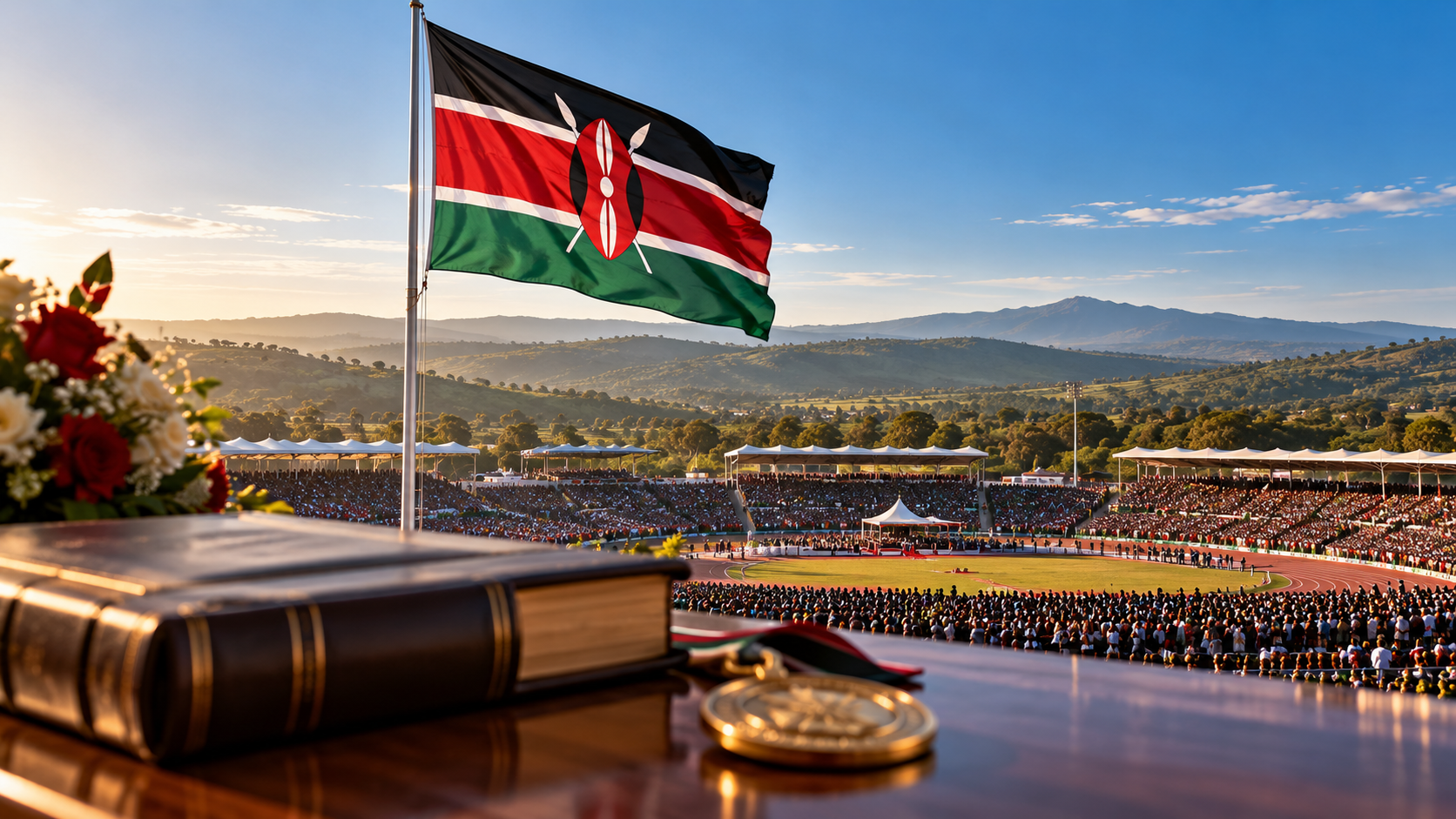
Mashujaa Day 2026 falls on Tuesday, 20 October, and this year the national celebrations move to Eldoret, with Uasin Gishu, Elgeyo Marakwet and Nandi counties co hosting. Most Kenyans know the day as a holiday to honour the freedom fighters who won independence. Fewer know that it rests on a detailed legal framework that decides who is recognised as a hero, how they are chosen, what the State owes them and even how your legal deadlines are counted.
This guide explains the law behind Mashujaa Day 2026 in six parts, from the Constitution to the practical effect of the holiday on businesses, contracts and court timelines.
1. Mashujaa Day 2026 is a constitutional national day
Article 9 of the Constitution of Kenya, 2010 names three national days: Madaraka Day on 1 June, Mashujaa Day on 20 October and Jamhuri Day on 12 December. Mashujaa Day replaced the former Kenyatta Day and broadened the focus from one leader to all those who contributed to the nation. Because the day is set by the Constitution itself, it cannot be removed by ordinary legislation, which gives it a status that most public holidays do not have.
The Public Holidays Act governs public holidays more generally, including the power of the Cabinet Secretary to declare additional holidays by notice in the Kenya Gazette. You can read both on Kenya Law.
2. The Kenya Heroes Act decides who is a hero
The Kenya Heroes Act, 2014 creates the legal framework for recognising and honouring national heroes. Under section 3, a person qualifies as a hero if they have contributed selflessly to the country and made sacrifices in one of the functional areas set out in the First Schedule to the Act.
Those areas are broad. They range from the liberation struggle and statesmanship to human rights, peacemaking, the arts, sports, indigenous knowledge, spiritual leadership and environmental conservation. Across the areas, the Act lists qualities such as patriotism, vision, integrity, commitment, courage and selflessness.
3. A national council runs the process
The Act establishes the National Heroes Council as a body corporate. Its functions include setting heroes policy, identifying and recommending heroes, managing the Heroes’ Squares, administering State assistance and keeping registers of heroes and their dependants.
The process is designed to be open. The Council calls for nominations from the public, organisations and institutions. Nominations are vetted and assessed against the criteria in the Act. The Council then publishes the proposed names in national newspapers and invites objections. After considering any objections, it sends its final list to the President, who declares heroes by notice in the Kenya Gazette. Under section 24, investiture takes place at a public ceremony on Mashujaa Day, and honours may be awarded posthumously.
4. Heroes and their dependants have legal entitlements
Recognition under the Act is more than ceremonial. Section 25 provides for heroes to be honoured through State invitations, cultural events, places and roads named after them, medals and certificates and the inclusion of their stories in the curriculum. Heroes in need may receive support from the National Heroes Fund, and the Government may provide health care, housing, food, water, social security and education for school age dependants.
Dependants may apply to be registered and considered for State assistance, and the Council must decide within 60 days. There is a right of appeal to the Cabinet Secretary. The Act also allows the Council, after an investigation, to caution or censure a hero or withdraw honours for serious misconduct, including conduct that violates Chapter Six of the Constitution on leadership and integrity.
5. Mashujaa Day 2026 can move your legal deadlines
Public holidays affect how legal time limits are counted. Under section 57 of the Interpretation and General Provisions Act, when the last day of a period set by a written law falls on a Sunday or a public holiday, the period generally runs to the next working day. Many court rules contain similar provisions.
Contracts are different. A commercial contract governs its own deadlines, and many define a business day to exclude weekends and public holidays in Kenya. If a payment, notice or delivery is due on 20 October 2026, check how your contract defines business days and how it treats deadlines that fall on a holiday. Where the contract is silent or unclear, take advice rather than assuming you have an extra day.
Banks and the Kenya Revenue Authority also observe the holiday, which can affect when payments clear. Businesses with payroll, tax or supplier payments due around Mashujaa Day 2026 should plan to make them early.
6. Employers have obligations on the day
Mashujaa Day 2026 is a working day for many Kenyans in essential and customer facing roles. Under the Regulation of Wages and Conditions of Employment (General) Order, employees it covers who work on a public holiday must be paid at twice their normal hourly rate, and courts enforce this. We set out the full picture in our guide to working on public holidays in Kenya.
A day to honour builders of every kind
The Kenya Heroes Act recognises that heroism takes many forms, from the battlefield to the boardroom, the classroom and the community. Kenya’s founders, innovators and business builders contribute to that story every day, and the legal frameworks that protect what they build, from company structures to contracts and intellectual property, are part of how a nation grows. Our guide to what commercial lawyers in Kenya do explains how businesses can build on firm legal foundations.
Frequently asked questions
When is Mashujaa Day 2026?
Tuesday, 20 October 2026.
Where are the Mashujaa Day 2026 celebrations being held?
The national celebrations are in Eldoret, with Uasin Gishu, Elgeyo Marakwet and Nandi counties co hosting, as announced by President William Ruto in July 2026.
Who can nominate a national hero?
Under the Kenya Heroes Act, members of the public, organisations, groups and institutions can submit nominations when the National Heroes Council calls for them.
Does a public holiday extend a court deadline?
Generally, under section 57 of the Interpretation and General Provisions Act, a period that ends on a public holiday runs to the next working day. Court rules and specific statutes can contain their own provisions, so check the rule that applies to your matter.
Talk to us about deadlines, contracts and compliance
Thomas Louis Advocates advises businesses and individuals across Kenya on commercial contracts, employment, regulatory compliance and transactions. Learn more about our Corporate and Commercial Transactions practice and read our latest analysis on TLA News and Insights.
If a deadline, payment or contract is affected by the holiday, you can contact our team, email [email protected] or call +254 115 702 315.
This article is for general information only and does not constitute legal advice. Please seek advice on your specific circumstances.